
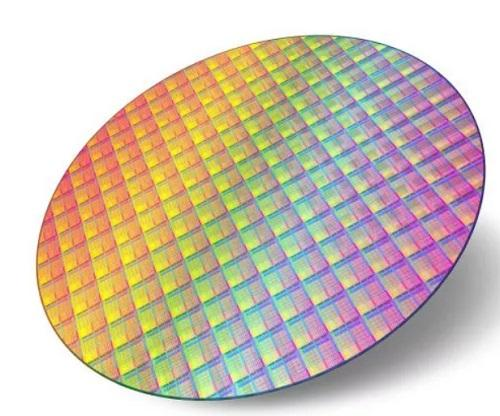
Stop Waiting on Your Ovens: Why Infrared is Winning in Semi Processing
I still see way too many semiconductor lines leaning on hot air for curing and drying. It’s the “old reliable” way, but let’s be honest—it’s slow. The problem is that air is just terrible at moving heat. You end up spending forever heating up a massive chamber just to get your workpiece to actually start reacting. It’s a lot of wasted energy and a lot of staring at a timer. The hidden cost of waiting Hot air relies on convection. It’s a slow dance where heat has to travel from the air to the surface. Infrared (IR) just cuts out the middleman. Instead of heating the air, you’re sending electromagnetic radiation straight into the material. It feels different. There’s no “warm-up” lag. In deep processing, your ramp-up time goes from minutes to seconds. You aren’t waiting for a fan to push hot air around the room; you’re hitting your target temperature almost instantly. Getting your floor space back Another thing? IR systems don’t take up nearly as much room. You can rip out those bulky ducts and giant blowers that eat up your floor space. In their place, you get targeted IR arrays. This is where it gets cool: you can actually do zonal heating. If one spot on your wafer needs a bit more heat than the rest, you just tweak the lamp intensity in that specific area. You can’t do that with a blast of hot air—that’s all or nothing. The catch (because there’s always one) Now, IR isn’t a magic wand for every single setup. Since you’re hitting the surface with high heat density, there’s a real risk of scorching the top layer before the core even gets warm. You have to be smart about your wavelength—shortwave or medium-wave—depending on what the material actually absorbs. If you pick the wrong one, the energy just bounces right off, and you’re back to square one. But for shops trying to push more volume, this is the way to go. It’s all about the cycle time. When you shave 60% off your heating phase, your total output jumps. And the best part? You do it without having to buy more machines or cram more gear onto the floor.