

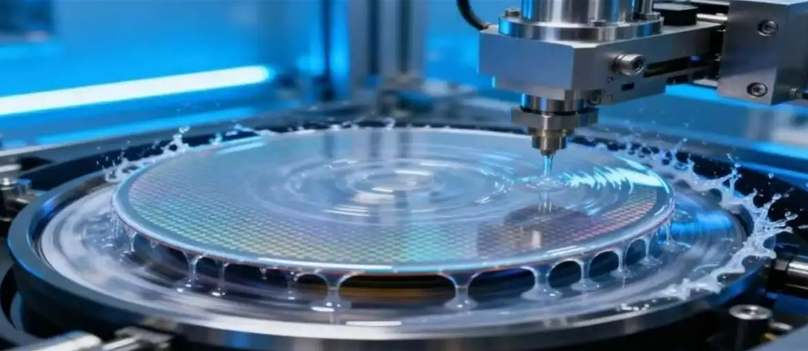
On the fab floor, a half-degree drift in a hot-plate zone isn’t a “small deviation.” It shows up as lost critical dimension, scum after develop, and photoresist that just won’t flow the way you planned. In lithography and resist processing, temperature isn’t a background setting—it is the process. What matters, technically We build thermocouples for semiconductor heaters around repeatability and clean thermal behavior. The junction is miniaturized and stabilized so it holds setpoint with minimal overshoot, helping us hit wafer-level thermal uniformity targets of ±0.1°C across soft bake and hard bake. Sheath material is chosen for low outgassing and corrosion resistance, even after repeated thermal cycling. Response time is tuned so closed-loop control can correct quickly—keeping the thermal budget tight without hunting or oscillation. Why it holds up in a real fab You’re running Class 1–100 cleanroom lines where particle count isn’t a suggestion—it’s a rule. These thermocouples are built to generate zero particles at temperature and to survive 24/7 operation without drift that forces recalibration. The payoff is stable bake profiles, consistent CD control, and fewer scrap lots traced back to thermal excursions. Energy use drops too, because tight control avoids the overheat-and-then-compensate cycle that wastes power and stresses the heater stack. Here’s what you need to get right Installation geometry matters. If the thermocouple sits too far from the wafer plane, it reads a different thermal story than the wafer sees, so alignment to the hot-plate map and proper immersion depth are mandatory. Grounding and shielding have to match the controller and your fab’s EMI practices—otherwise, noise can bury the small temperature shifts you’re trying to control. Specify connector type and lead length to match your equipment footprint, and keep a routine verification plan against a reference standard so the loop stays traceable.