
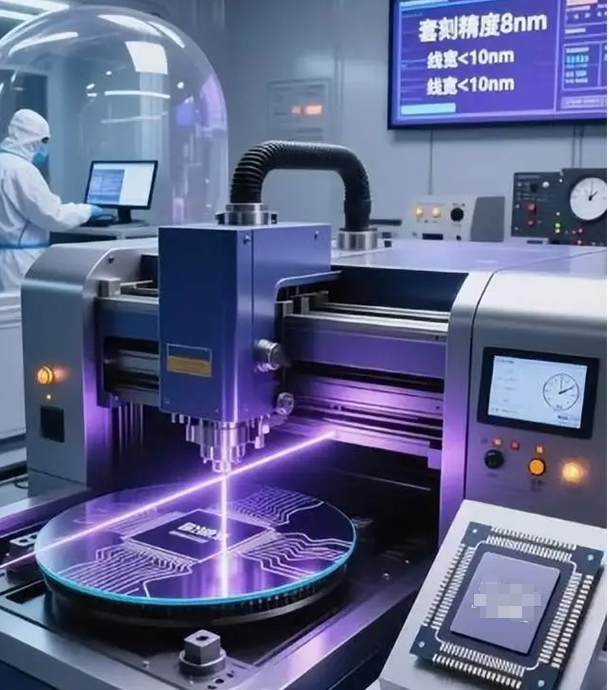
On the fab floor, the photoresist bake isn’t a warm-up. It’s a hard process boundary. Miss the temperature by a few degrees on soft bake or hard bake, and your critical dimension control falls apart. The line starts rejecting wafers before etch even sees them. That’s why the vacuum oven heating elements have to hold thermal uniformity across the chamber, across the batch, and week after week. What matters, technically We build these heating elements for fab-grade thermal discipline. Hold temperature uniformity across the hot zone at ±0.1°C, so every wafer gets the same thermal budget, run after run. You get rapid, stable ramp control for soft bake and hard bake profiles, and repeatability that keeps within-lot variation tight. They’re cleanroom-ready for Class 1–100, with low outgassing and zero particle generation under operating conditions. Reliability comes down to uptime. We design for 24/7 operation with predictable maintenance windows, not surprise stops. Why this matters in lithography In lithography, the bake is where the resist profile gets locked in. Tighter uniformity cuts photoresist line-edge roughness and gives you more dose latitude. That translates straight into higher first-pass yield. Tighter repeatability also shortens qualification time and cuts rework. The thermal system’s efficiency reduces energy draw during stabilization, so you lower operating cost without slowing cycle time. Things to keep in mind These elements fit standard vacuum oven platforms, but chamber geometry, mass loading, and the bake profile all set the final uniformity. Installation has to match the oven’s thermal mass and pump-down behavior. Commission with your specific fixturing and process recipes, and you’ll lock in that ±0.1°C window.