
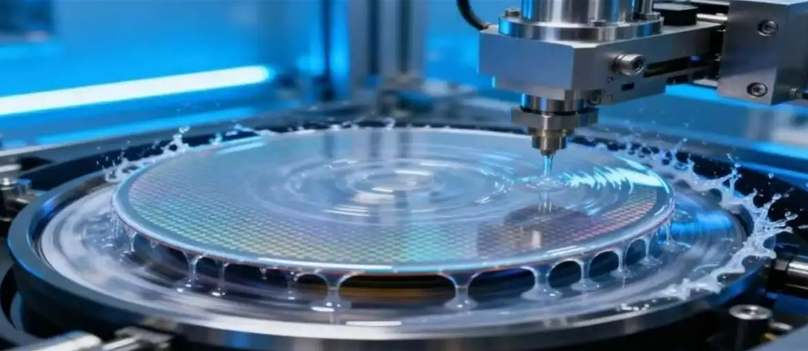
On the fab floor, a 0.3°C drift during the photoresist bake doesn’t just risk spec—it blows right past it. That isn’t a near-miss; it’s scrap. We built the heating solution for the zero-tolerance reality of semiconductor manufacturing, where thermal budget is set in stone and unplanned downtime costs you wafer starts. What matters under the hood We pair short-wave infrared emitters with quartz-based thermal management to hold wafer-level uniformity at ±0.1°C across the bake surface. Cycle-to-cycle repeatability stays within 0.05°C, so soft bake and hard bake profiles follow the recipe exactly. Cleanroom compatibility is baked in: Class 1–100 operation with zero particle generation, verified by in-situ particle monitoring and materials that don’t outgas. Reliability around the clock comes from controlled thermal inertia, redundant sensing, and a design that holds setpoint even when mains voltage moves around. Why this works in lithography In the litho bay, that precision buys you stable CD, less line-edge roughness, and fewer rework lots. The process window opens up because the thermal profile stops fighting the resist chemistry. You also cut energy use—thanks to efficient NIR coupling and tight closed-loop control—and you reduce consumable changes with long emitter life and predictable maintenance. The big payoff? Yield that behaves itself. Same temperature, every time, shift after shift, tool after tool. Here is what you need to get right Integration comes down to matching chamber footprint, exhaust, and utilities. Voltage, amperage, coolant, and exhaust flow all need to line up with the thermal load. The system fits most track interfaces, but a quick site commissioning makes sure the bake profile maps cleanly to your resist stack and film stack. Plan for the thermal mass shift when you swap carriers; we provide the calibration routines so uniformity stays intact after changeover.