



Stop Wafer Contamination Before It Starts: A Real Look at Lamp Safety
In a high-volume wafer line, a lamp burning out is a headache. But a quartz tube actually bursting? That’s a nightmare. When those tubes shatter, you’ve got glass shards and chemical gunk raining down right onto your wafers. It doesn’t just stop the line—it kills the entire batch. We’ve spent a lot of time designing our digital IR dryer controllers and lamp assemblies specifically to make sure that never happens to you.
Dealing with the Heat
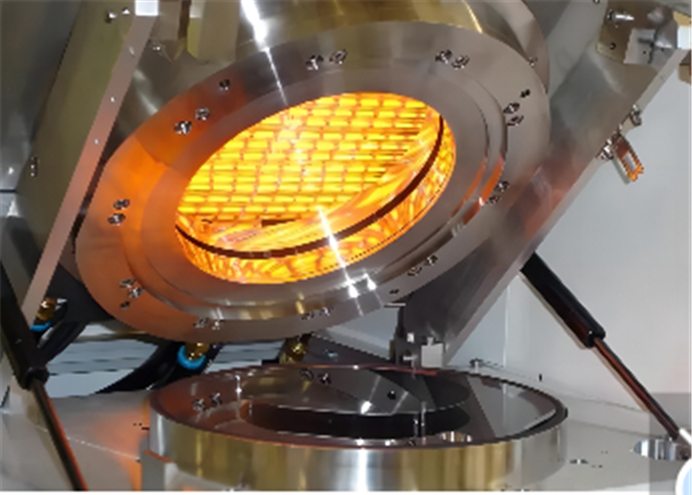
Most lamps fail because of “hot spots.” If the filament gets too hot in one spot while the rest of the tube is lagging behind, the quartz stresses out and cracks. Simple physics. To fight this, we use high-purity fused quartz with a wall thickness that can actually handle the expansion. But the hardware is only half the battle. Our digital controllers handle the power ramp-up carefully. We don’t just slam the lamps with full voltage the second you hit “start.” Instead, we use a stepped heating curve. It gives the tube a chance to stabilize and breathe.
The “Safety Net”
Even with the best lamps, things happen. That’s why we don’t let the lamps sit exposed. We add high-transmittance quartz shields that act as a sacrificial layer. Think of it as a bodyguard for your wafers. If a lamp does pop, the shield catches the debris. You end up replacing a shield instead of throwing away a whole lot of expensive wafers. Much better trade.
The Balancing Act
Here’s the tricky part: high-wattage shortwave lamps are great because they cure things fast, which keeps your throughput high. But all that heat density puts a massive strain on the lamp ends. If your cooling fans aren’t up to the task, heat builds up right at the connectors. That’s usually where the seals fail. The secret is making sure your airflow is balanced across the whole heater bank. If one spot is dead air, that tube is going to fail way sooner than it should.
Watching Your Back
Our controllers keep a constant eye on the current draw of every single lamp. The moment a filament breaks, the system catches the open circuit. It kills the power to that specific zone and trips an alarm immediately. This is huge because it stops the other lamps from trying to “help out” by over-compensating—which is how you end up with a chain reaction of burnt-out bulbs.