
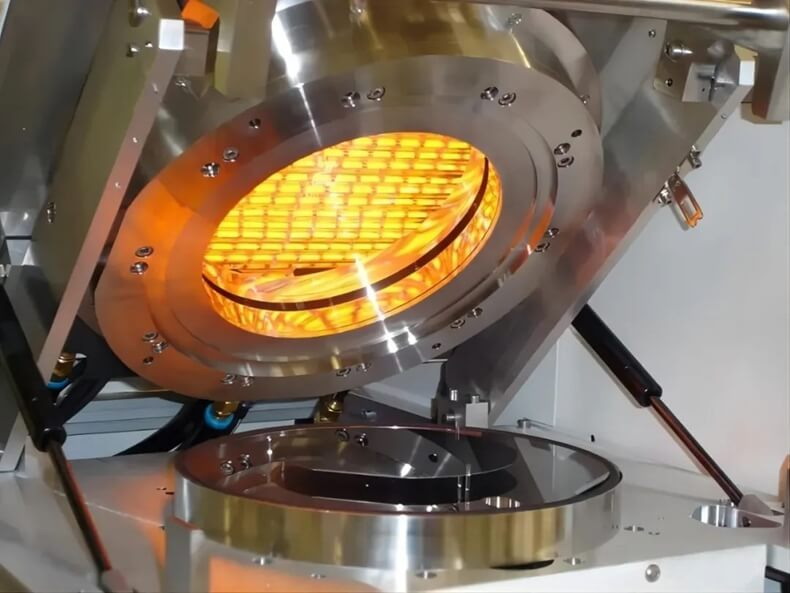
Stop Heating Your Vacuum Chamber Walls
If you’ve ever run high-wattage IR lamps in a vacuum, you know the struggle. Since there’s no air to move the heat around, that energy has nowhere to go. It just soaks into the chamber walls. It’s not just a waste of electricity. It’s actually dangerous. You end up with inner walls that can burn an operator or warp the very parts you’re trying to protect. Not a great way to run a lab. The trick is getting the heat to go where it’s actually needed. Instead of letting the radiation spray everywhere in a 360-degree circle, we use directional IR technology. Think of it like a flashlight instead of a bare lightbulb. We use internal reflectors and special coatings to push all that thermal energy forward, straight onto the wafer or substrate. The result? Your target gets the heat it needs, but the equipment skin stays cool to the touch. But you can’t just throw any lamp in there. Standard heating elements would be a disaster. If a lamp leaks volatile organic compounds—what we call outgassing—it’ll contaminate the vacuum and kill your entire semiconductor batch. That’s why we stick to high-purity quartz and sealants that actually hold up. The filaments are built to handle brutal temperatures without breaking the vacuum seal. Now, there is a catch. When you focus a beam this tightly, you’re dealing with a lot of heat density. You’ll see your ramp-up times drop significantly, which is great. But it means you have to be precise. If your lamp is off by a fraction or your power settings are too high for the distance, you’ll scorch the substrate. It’s a balancing act. You have to dial in the focal length and wattage carefully to get it just right. The good news is that these units are designed to be drop-in replacements for your standard IR arrays. Just double-check that your power supply can handle the voltage and current draw—since these hit a lot harder than the standard stuff.