
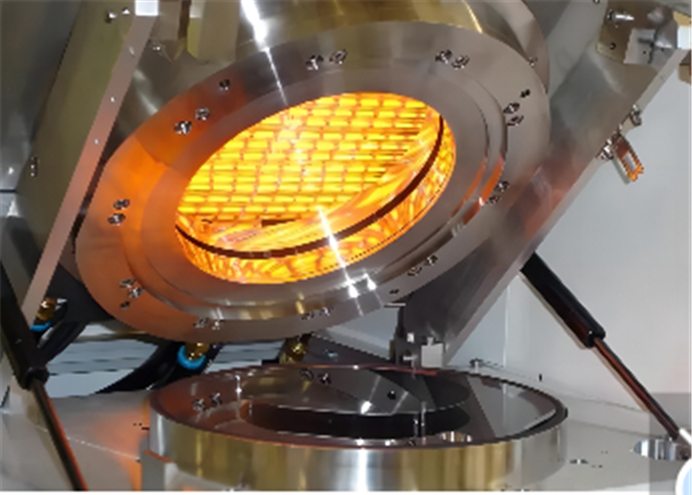
On the lithography floor, you learn fast: a half-degree drift during photoresist bake is enough to move critical dimensions and turn a whole lot into scrap. We built our high-precision temperature heater to stop that from happening—holding wafer-level thermal uniformity within ±0.1°C across both soft bake and hard bake. What matters under the hood is simple: control, repeatability, and keeping the line clean. The heater uses short-wave infrared, so it responds quickly and repeatably to stabilize the wafer thermal budget. Quartz components and a cleanroom-compatible architecture keep particle generation at zero, which is what you need for Class 1–100 environments. Integrated sensing and control close the loop in real time, so setpoints for photoresist processing stay consistent lot to lot—even when line voltage isn’t. Temperature is the knob that directly controls solvent removal and polymer crosslink in lithography. Our heater locks in the soft bake profile to cut footing and scum, then runs a tight hard bake that improves adhesion before etch. The payoff is better CD control and fewer reworks, and you get there without stretching bake time. Energy use drops too, because the system hits setpoint fast and holds it with minimal overshoot. A couple of practical notes before you spec it in. Installation needs a dedicated, filtered power feed and proper thermal isolation so you don’t couple into adjacent stations. Expect a short commissioning window to tune the recipe for your photoresist stack. The unit works with most track interfaces, but if you’re integrating to older platforms, you may need a custom mechanical adapter.