
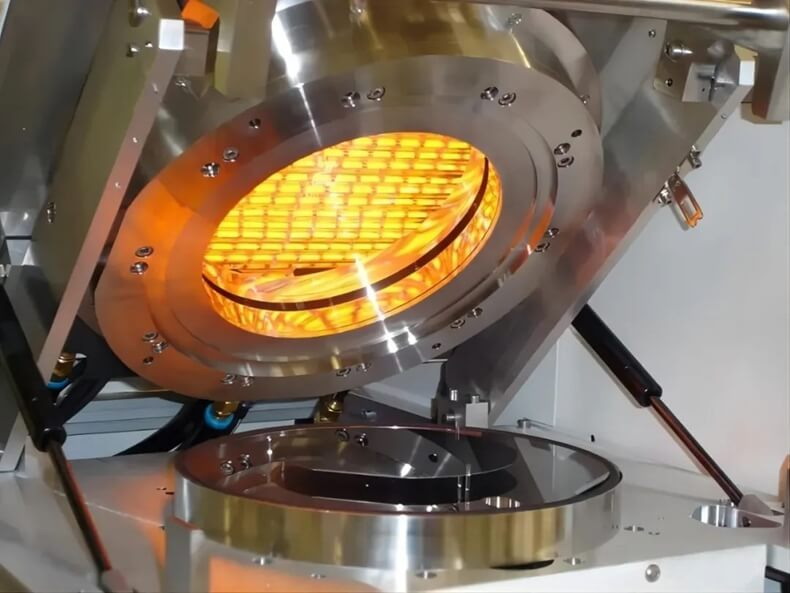
On a 300mm line, soft bake and hard bake aren’t just thermal steps—they’re yield gates. If your IR heat isn’t uniform, you’ll see linewidth variation, edge bead, and scum that survives cleaning. You can’t inspect your way out of that. Fix the temperature profile at the source. What matters technically We built the 300mm wafer IR heater around short-wave infrared, with engineered reflectors and closed-loop zone control. That gives wafer-level uniformity within ±0.1°C. That tight band protects the photoresist thermal budget across the whole film stack. The hot zone stays particle-controlled for Class 1–100 cleanroom integration, and we’ve verified zero particle generation against in-line metrology. Repeatability is baked into the design—setpoints return the same thermal profile run-after-run, lot-after-lot. Why it holds up in production In lithography bake tracks, uptime is the currency. This system is built for 7×24 with zero unplanned downtime, using thermal elements rated for long-life duty cycles and a thermal architecture that stays stable under mass-production load. The payoff is predictable CD control, fewer rework lots, and a process window that doesn’t drift, so scrap and requalification time drop. Energy use is optimized through fast ramp control and minimal idle losses, keeping operating cost down without sacrificing uniformity. What you need to plan for The system needs a dedicated power and coolant plan matched to the thermal load and cleanroom exhaust. Integration is straightforward into standard tracks, but the footprint and interface constraints are fixed—line up your tool layout and maintenance access before you finalize the floor plan. And schedule periodic calibration checks so that ±0.1°C stays traceable across wafer types and bake recipes.