

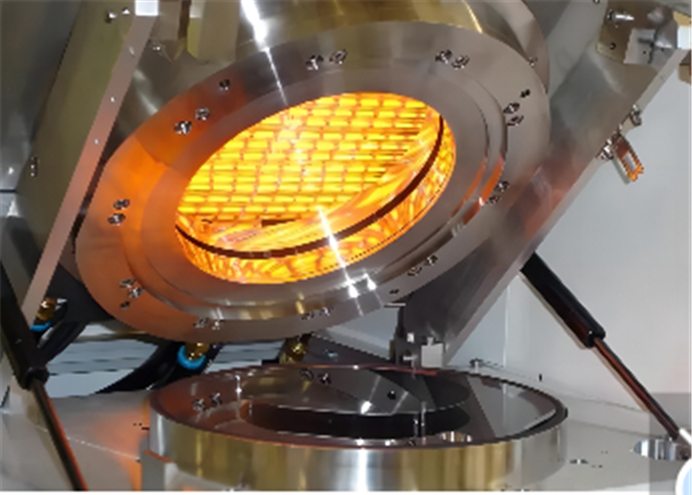
On the smart sensor packaging line, temperature uniformity isn’t a nicety—it’s the line between making yield and making scrap. A 1°C swing across the die during epoxy cure, or a hot spot while sealing the lid, throws off calibration and sets you up for field failures. We built our infrared thermal systems for exactly that reality. What matters under the hood We run short-wave infrared emitters with fast response and tight spectral control, so we heat the package directly, non-contact, without overdriving the polymers sitting next door. Across the active zone, wafer-level uniformity holds at ±0.1°C, and repeatability comes from closed-loop control at the substrate—not at the heater housing. The platform sits comfortably in Class 1–100 cleanrooms, and we verify zero particle generation in situ during bake and cure. It’s 24/7 reliability, with zero unplanned downtime, supported by modular emitter assemblies and service time measured in minutes. Why this fits smart sensor packaging Smart sensors demand crisp thermal boundaries: photoresist soft bake and hard bake that hit the profile every time, epoxy gel flow that behaves consistently, and hermetic sealing without thermal overshoot. We keep the thermal budget tight, so you can push throughput without chasing drift. Energy use drops because the energy goes where the process needs it, and cycle windows open up without stressing the tolerance stack-up. What you need to plan for Installation needs a dedicated 240 V line and a cleanroom-rated exhaust path to handle outgassing at peak temperature. The system plays nicely with standard handlers and bonders, but integrating into legacy ovens will take a short engineering window to line up mechanical and control interfaces. Plan one week for qualification—you’ll lock the profile on day one.