Keeping Things Warm (and Safe) in Wet Zones
If you’ve ever tried to put a heater in a shower or a high-humidity area, you know it’s a bit of a nightmare. You’re basically fighting two things: water getting where it shouldn’t and the dreaded thermal shock. Most standard infrared lamps just can’t hack it. One tiny drop of cold water hits a scorching quartz tube, and snap—it fractures instantly. To stop that from happening, we pair IP65 enclosures with explosion-proof quartz glass.
Why “Explosion-Proof” Quartz Actually Matters
Standard quartz is finicky. Imagine a surface at 600°C. Now imagine a cold droplet hitting it. That sudden temperature swing creates a massive amount of stress in one spot, which is why tubes shatter. We use a specific grade of quartz that can actually handle that kind of stress. Now, I’m not saying the tube is immortal. But if something does go wrong, the glass won’t just explode into a thousand shards. It’s designed to stay together even when the temperature drops fast. It’s about peace of mind.
Dealing with the Damp (The IP65 Stuff)
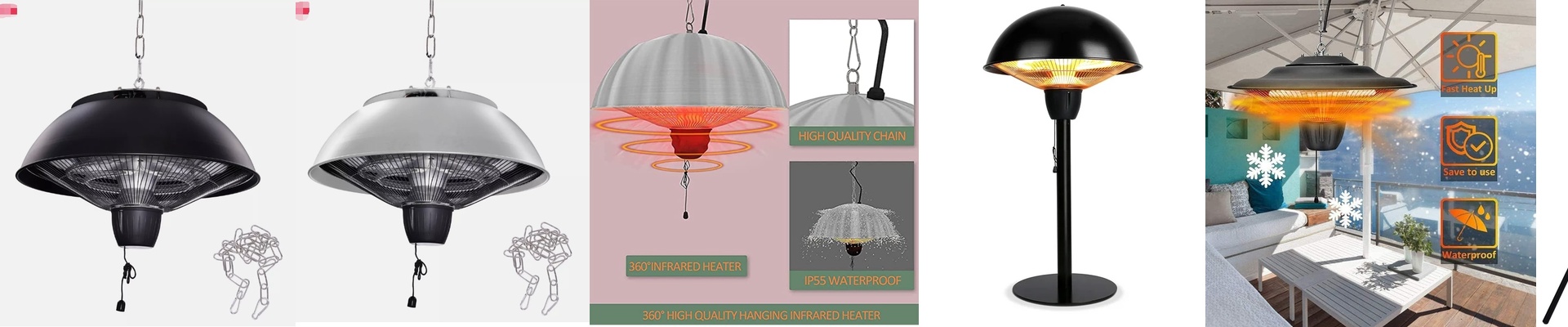
When we talk about IP65, we’re really just saying the unit is tight. No dust gets in, and it can handle a direct blast of water without blinking. We spend a lot of time sealing the electrical terminals and the housing. Why? Because steam is sneaky. It finds its way into the wiring, and that’s how you end up with a short circuit or a ground fault. We use high-temp silicone gaskets to keep the insides bone-dry, while still letting the heat pass through the lens.
The Honest Trade-off
Here’s the thing: you can’t have everything. Because we’ve wrapped the heater in a protective shell for safety, you lose a little bit of that raw heat density. It takes a bit longer to hit your target temperature compared to a bare tube. You’ll also want to make sure your power supply can handle the initial surge. And, of course, the housing has to be tough enough to survive constant humidity without rusting away. It’s a few extra considerations, but it’s the only way to make sure your heater stays a tool and doesn’t become a liability.