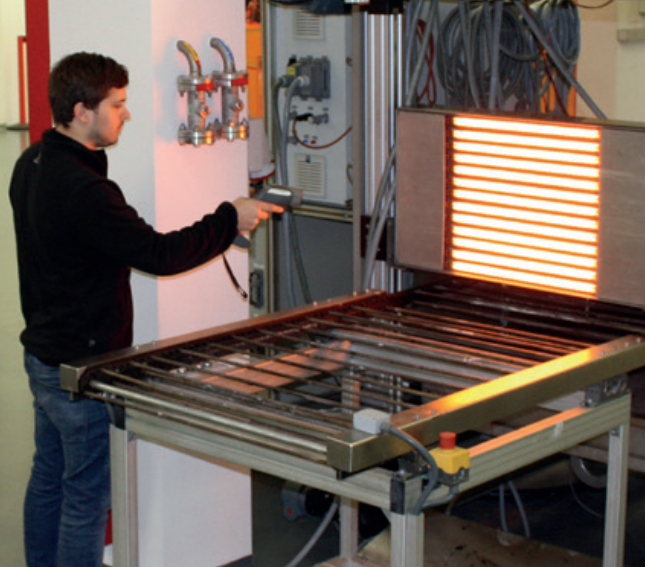
What to Measure before Changing Custom Quartz IR Module
The expensive mistake is to change hardware before the job has a measurable definition. Start with the workpiece, the acceptance test and the operating envelope. That keeps the investigation narrow enough to learn from.
Define the Endpoint
State the required a dry, flexible finish without surface damage, the location where it matters and the test that decides acceptance. Do not substitute a visible surface change for the actual requirement.
Run the Work in Order
- Record material, geometry and starting condition.
- Verify guards, exhaust or ventilation, cooling and stop logic.
- Establish the current baseline for leather surface temperature, residual moisture and finish acceptance.
- Apply one bounded change to custom quartz IR module.
- Test the work with the agreed acceptance method.
- Save the recipe, evidence and exception notes.
Release Gate
Use representative material, a defined start condition and the real acceptance method. Establish a baseline, change one controlled variable, measure the result at more than one location and retain rejected as well as accepted samples. Finish cure, adhesion and flexibility must be tested with the coating supplier’s approved method.
Where the Product Record Fits
The current Goldisgood record describes a reflector-coated quartz infrared lamp family whose source record includes wet-process and shoe-machine applications. That makes it a candidate to review only after the required leather surface temperature, residual moisture and finish acceptance and mechanical/electrical interfaces are written down. Compare the documented record at Goldisgood reflector-coated quartz lamp record, then qualify the installed result on representative work. The catalogue is evidence of an available product family; it is not proof of suitability for this task.
Related Articles
- How to Run A Controlled Infrared Leather Finish Drying Trial
- How Hide Thickness, Colour, Coating Chemistry and Add-on Changes Infrared Leather Finish Drying