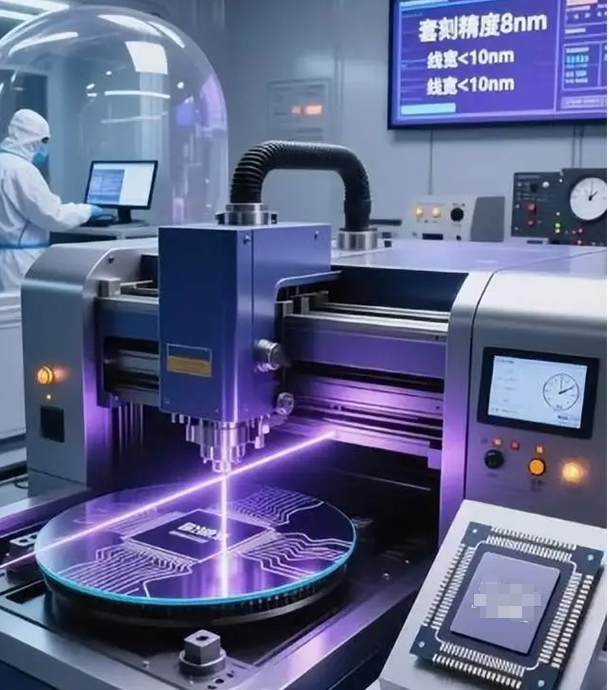
On the fab floor, a lithography lamp going down doesn’t just park a tool—it stops the whole sequence that defines device geometry. When the lamp starts to underperform, the soft bake and hard bake profiles drift, photoresist thickness starts to wander, and you lose repeatability on the line. ASML lithography lamp spares are built to keep the thermal budget where it needs to be, so exposure, pre-bake, and cure steps stay locked to spec. What matters under the hood We spec short-wave and medium-wave NIR sources that match the photoresist absorption curve, giving stable output from 300 nm to 1100 nm. Across the bake surface, wafer-level thermal uniformity holds ±0.1°C, and temperature setpoints repeat within a few degrees. The quartz envelope and engineered filament geometry hold spectral output steady over 5,000+ hours, with less than 5% output drop. Cleanroom Class 1–100 compatibility comes from low-outgassing materials and a particle-aware design that keeps contamination off the wafer. In photoresist processing, the soft bake pulls out solvents and sets the film profile; the hard bake locks the pattern before etch or implant. Our lamps deliver the exact infrared profile those steps need, without overshoot, undershoot, or edge roll-off. The payoff is tighter critical dimension control, fewer rework lots, and cycle time you can plan around. Energy use stays lean thanks to fast thermal response and efficient power delivery, and the long service interval cuts unplanned downtime. Here are a few things you learn the hard way. Installation has to follow the tool’s lamp alignment and coolant specs to the letter. Output stability depends on steady voltage and consistent cooling flow—any wobble there shifts the bake curve. Make sure connector type, envelope dimensions, and power rating line up with your ASML tool configuration, then schedule replacements during planned preventive maintenance so process continuity stays intact.